Stop Guessing: Five Summer Hydration Questions Every Southerner Should Ask
You packed your water bottle.
Great.
Did you actually drink it?
If you've ever finished a walk, workout, or afternoon spent in the yard only to discover your water bottle is still almost full, you're in good company. Most of us know staying hydrated matters — especially during a Mid-South summer. The tricky part isn't knowing if you should drink water; it's knowing whether you're actually drinking enough.
When temperatures climb and humidity settles in, your body loses more fluid through sweat, making hydration an essential part of exercising safely and feeling your best. Fortunately, you don't have to obsess over every ounce or carry around a gallon jug to stay on track.
At Healthier 901, we're all about making healthy habits feel simple and sustainable. Let's tackle five of the most common hydration questions — and help you stop guessing about what your body really needs this summer.
"Proper hydration supports everything from exercise performance to body temperature regulation and recovery. Developing consistent hydration habits before, during, and after physical activity can help people stay safer and feel better during summer exercise." – Dale Criner, MD, at Methodist Le Bonheur Healthcare
SUBSCRIBE TO OUR BLOG
and you'll receive more health & wellness tips right in your inbox.
SUBSCRIBE NOW1. How much water do I actually need?
There's no single magic number that works for everyone.
Your hydration needs depend on factors like your age, body size, activity level, medications, the weather, and — perhaps most importantly during a Memphis summer — how much you sweat.
General daily fluid recommendations are a helpful place to start, but if you're exercising outdoors, you'll likely need additional fluids to replace what your body loses during activity. The hotter and more humid it is, the more important it becomes to hydrate before, during, and after your workout.
Instead of chasing the "perfect" number of ounces, focus on making hydration a consistent habit throughout the day.
2. Should I wait until I’m thirsty to hydrate?
In a word: no.
Thirst is your body's way of telling you it's already starting to run low on fluids. During hot-weather workouts, waiting until you feel thirsty can make it harder to keep up with your hydration needs.
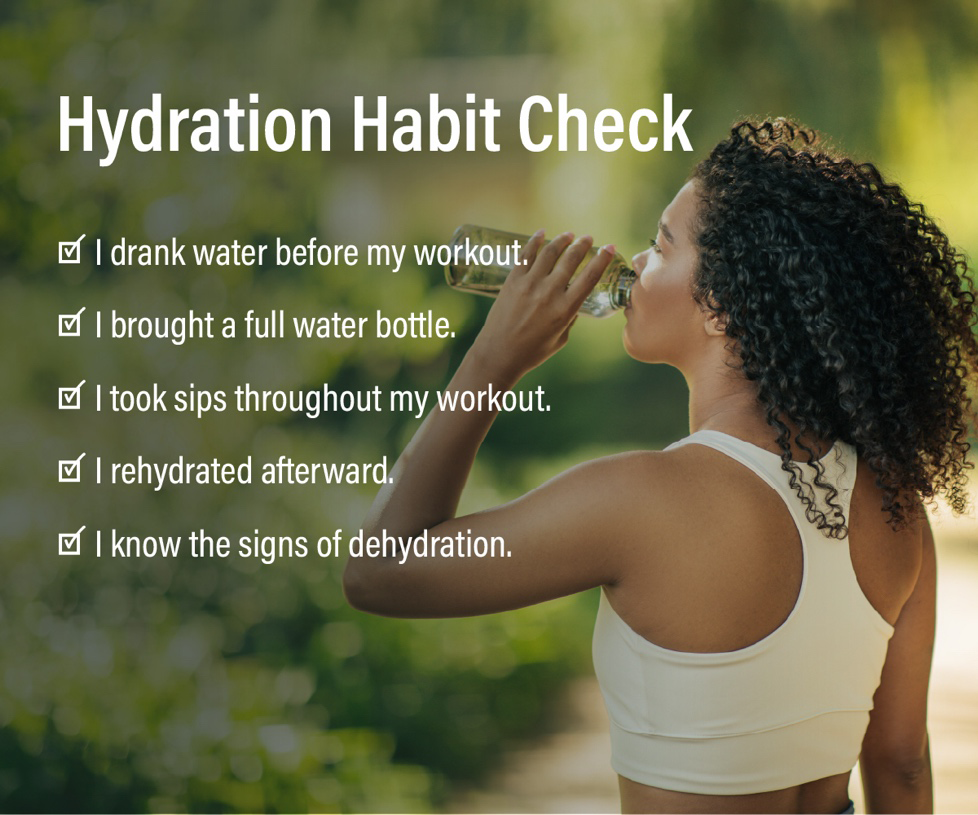
A better strategy is to build drinking water into your routine. Have a glass with meals. Take a few sips before heading outside. Bring a refillable water bottle wherever your day takes you, and make a point to drink from it regularly — not just carry it around.
Small, consistent sips are often more effective than trying to chug a large amount of water after you've finished exercising.
3. How can I tell if I’m staying hydrated?
Your body offers plenty of clues — you just have to know where to look.
Feeling unusually tired during a workout? Developing a headache? Experiencing dry mouth, dizziness, or muscle cramps? These can all be signs that your body needs more fluids.
Urine color can also provide a helpful snapshot. Pale yellow urine generally suggests good hydration, while darker urine may indicate it's time to drink more water. Keep in mind that certain vitamins, medications, and foods can temporarily affect urine color, so it's just one piece of the puzzle — not the whole picture.
The more familiar you become with your body's signals, the easier it becomes to catch dehydration before it affects your workout.
4. Do I need sports drinks, or is water enough?
For many workouts, plain water does the job beautifully.
If you're exercising for less than an hour at a moderate intensity, water is typically all you need. However, longer or more intense workouts — especially those that involve heavy sweating — may call for drinks or foods that help replace electrolytes like sodium and potassium.
Sports drinks can be helpful in certain situations, but they aren't necessary for every walk around the neighborhood or trip to the gym. If you're unsure what's appropriate for your activity level or health needs, your healthcare provider can help you choose the best hydration strategy. If you do reach for a sports drink, compare labels carefully. Many varieties contain significant amounts of added sugar, so they’re best reserved for longer, higher-intensity workouts rather than everyday hydration.
5. What’s the easiest way to make hydration a habit?
Healthy habits are often the simplest ones.
Rather than relying on memory, build hydration into your day using cues that already exist.
Try filling your water bottle before leaving the house, drinking a glass of water with every meal, refilling your bottle after each workout, or setting reminders on your phone during especially busy days. You can also boost your fluid intake by eating water-rich foods like watermelon, cucumbers, strawberries, tomatoes, and oranges.
The goal isn't perfection. It's making hydration automatic enough that you don't have to think about it.
"Many people think about hydration only after they finish exercising, but planning ahead is just as important. Drinking fluids consistently throughout the day helps prepare your body for activity and supports recovery afterward." – Dale Criner, MD, at Methodist Le Bonheur Healthcare
Drink smarter — not just more
Summer workouts should leave you feeling stronger, not sidelined by dehydration.
Whether you're training for your next race, walking the dogs around the neighborhood, cheering from the sidelines, or squeezing in a quick sunrise workout, staying hydrated is one of the simplest ways to support your health and exercise safely through the hottest months of the year.
So refill that water bottle — and this time, remember to drink from it.
Looking for more ways to support your health this summer? Explore Healthier 901 for healthy recipes, nutrition resources, fitness tools, wellness challenges, and practical tips designed to help you build healthy habits that last all year long.
Related Articles